
Mount Isa Inlier, Northwest QLD
Sybella Flagship Rare Earths Project
A giant, granite-hosted rare earths discovery located near Mount Isa in northwest Queensland.
Sybella is Red Metal’s 100%-owned flagship rare earths project, now advancing through Pre-Feasibility Study toward a heap leach development pathway that is fundamentally simpler, and potentially lower-cost, than the processing most rare earth deposits require.
What Makes Sybella Different
Most rare earth deposits are hosted in clay, or in hard, chemically resistant minerals like monazite (both of which typically need aggressive processing to unlock the rare earths inside). Sybella is different. It’s a granite-hosted deposit in which the rare earth minerals occur as soluble fluoro-carbonates, meaning they dissolve readily in weak acid at ambient temperature, with no high-temperature acid bake or chemical “cracking” required.
Three further characteristics reinforce that advantage. The mineralisation starts at surface across the target zone, so there’s no barren rock to strip away first (zero strip ratio). The granite host is easily crushed, avoiding the energy-intensive fine grinding many ores need. And because the host rock is clay-poor and non-acid-consuming, more of the leach acid goes to work dissolving rare earths rather than being absorbed by the rock itself.
Together, these characteristics point toward heap leaching — stacking crushed ore and irrigating it with weak acid — rather than the high-temperature reactors, complex chemical circuits and clay handling most rare earth projects require. For investors, that matters because heap leaching is one of the lowest capital- and operating-cost ways to process ore in the industry: if it continues to hold up through feasibility work, it could materially improve Sybella’s economics and time-to-production relative to peer rare earth developments.
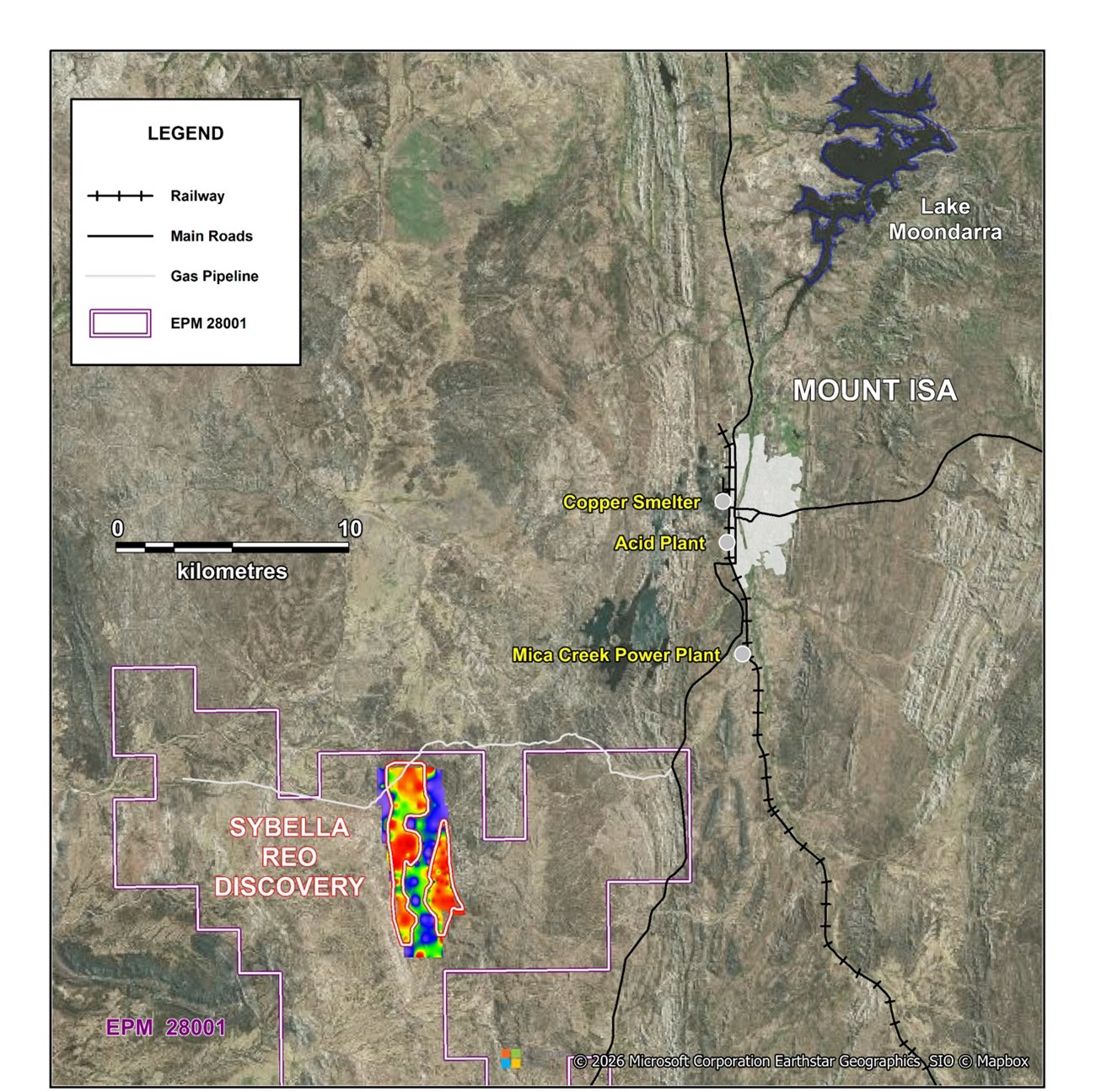
Figure 1 Sybella Project: Red Metal drill hole locations (black dots) on satellite imagery overlain by a colour image of the average grade of NdPr oxide to 60 metre down-hole.
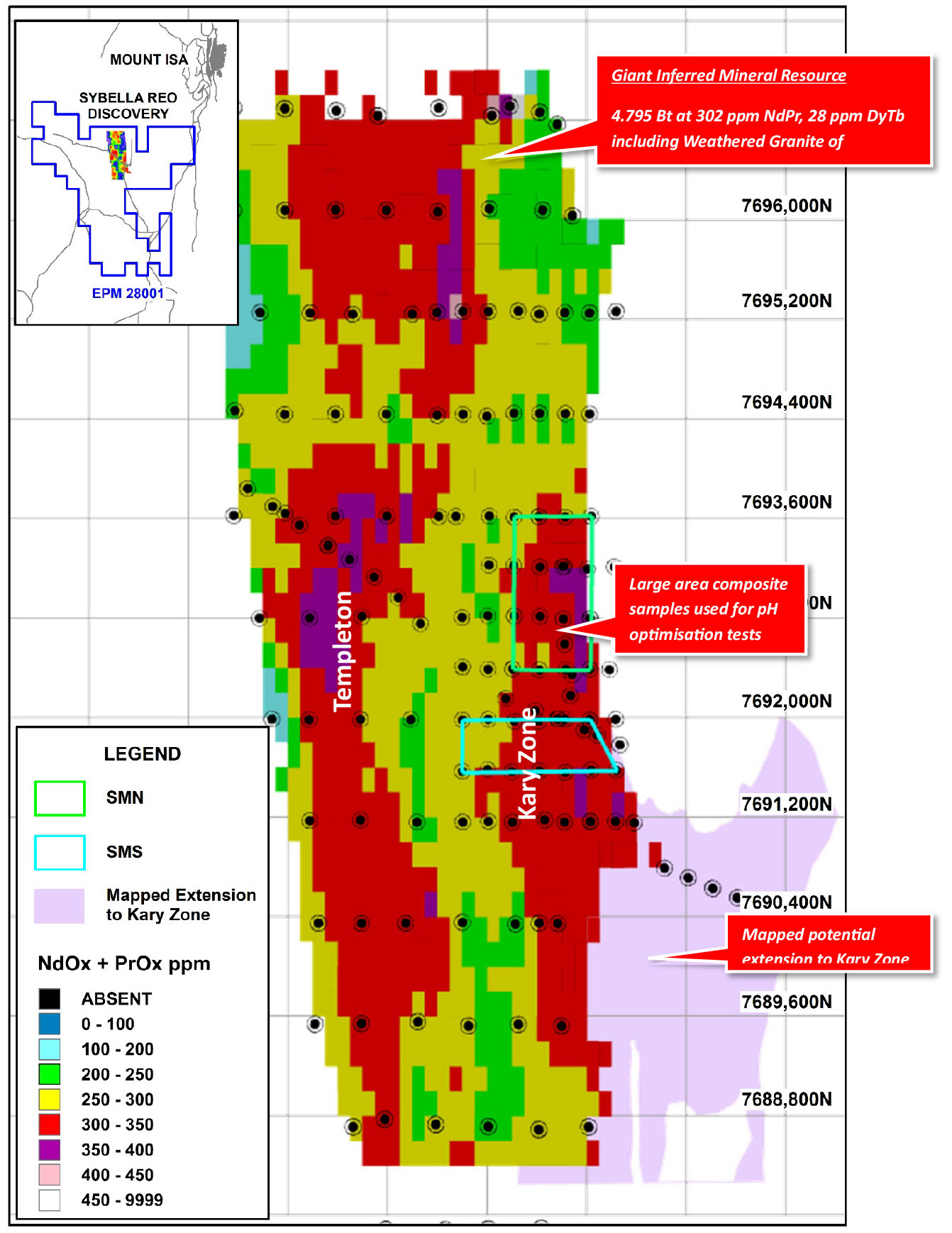
Figure 2 Sybella Inferred Mineral Resource Estimate: Block model level plan showing variation in NdPr oxide block grade values from surface to 6 metres. No other rare earths are included in this particular depiction. Grid is 800 metre by 800 metre.
*Refer to Red Metal ASX announcement dated 21 October 2024 for Inferred Mineral Resource details.
Not Your Typical Rare Earth Deposit
| Most rare earth deposits | Sybella | |
|---|---|---|
| Processing route | High-temperature acid bake or caustic “cracking” circuits | Weak sulphuric acid leach at ambient temperature |
| Ore type | Clay-rich, often requiring beneficiation and careful clay management | Clay-poor, competent granite — crushed and stacked directly |
| Processing infrastructure | Complex, high-capital processing plants | Simple heap leach infrastructure |
| Mining | Often requires significant waste stripping | Starts at surface — zero strip ratio |
Column leach testing completed in June 2026 confirmed this heap leach pathway on a representative, mine-scale sample of the Kary Zone ore — a key de-risking milestone ahead of the current Pre-Feasibility Study.
Simpler processing could mean lower complexity, lower capital intensity and a straightforward, more efficient path to development.
Step 1
Crush ore
Step 2
Heap leach (weak acid, ambient temp.)
Step 3
Ion exchange (in progress)
Step 4
Precipitate MREC
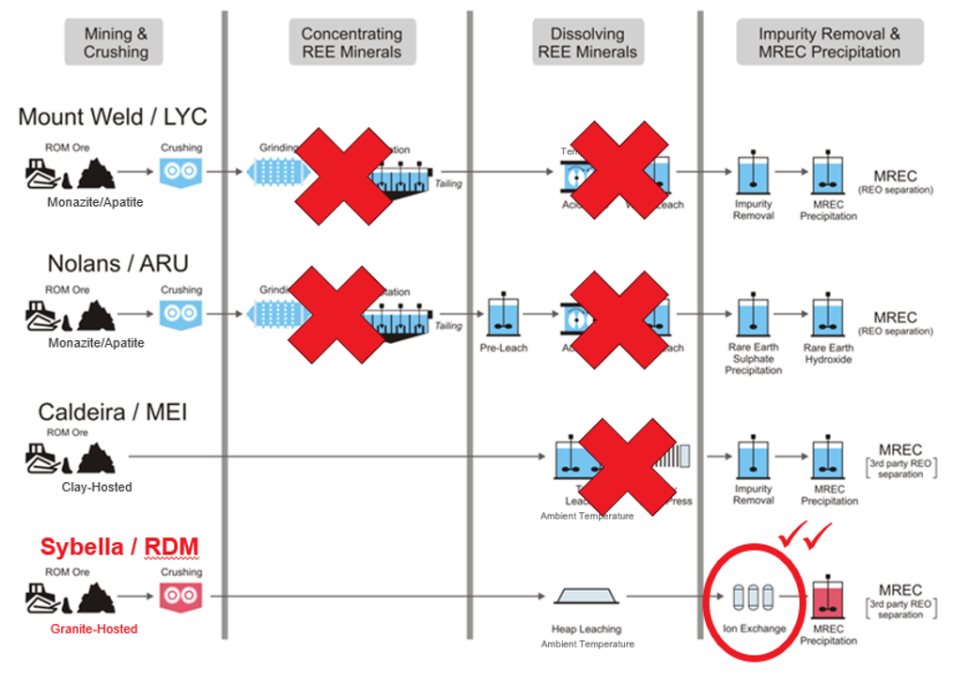
A simple, four-step process rather than the multi-stage acid-bake circuits monazite ores require.
Proven at Scale
A maiden Inferred Mineral Resource, announced 21 October 2024, confirmed very large tonnages at economically attractive grades: 4.795 billion tonnes at 302ppm NdPr and 28ppm DyTb (200ppm NdPr cut-off), remaining open below 100 metres. Within that, 788 million tonnes at 297ppm NdPr and 28ppm DyTb sits in near-surface Weathered Granite — a lower-cost, earlier mining opportunity within the broader resource. For investors, the scale supports a long potential mine life, while the near-surface subset offers a pathway to a lower-capital, faster start.
De-Risking Through Testing
Column leach testing announced in June 2026 achieved neodymium extractions of 70–76% and praseodymium extractions of 71–78%, at acid consumption as low as 23kg H₂SO₄ per tonne — strong results from a definitive, mine-scale test. Results from ongoing testing on the Fresh Granite mineralisation are due shortly. Separately, a November 2025 breakthrough in ion exchange processing showed Red Metal can replace the standard two-stage impurity removal process with a single, simpler step — cutting flowsheet complexity while improving recoveries. Each result removes a layer of technical risk that the market typically prices into early-stage rare earth developers, moving Sybella closer to an investment-grade study.
| Kary Zone | Saprock -10mm | Saprock -20mm | Transitional -10mm | Transitional -20mm |
|---|---|---|---|---|
| Neodymium (Nd) Extraction | 71% | 70% | 76% | 75% |
| Praseodymium (Pr) Extraction | 72% | 71% | 78% | 76% |
| Dysprosium (Dy) Extraction | 41% | 40% | 39% | 40% |
| Terbium (Tb) Extraction | 43% | 43% | 44% | 43% |
| Acid Use (kg/t) | 27 | 24 | 26 | 23 |
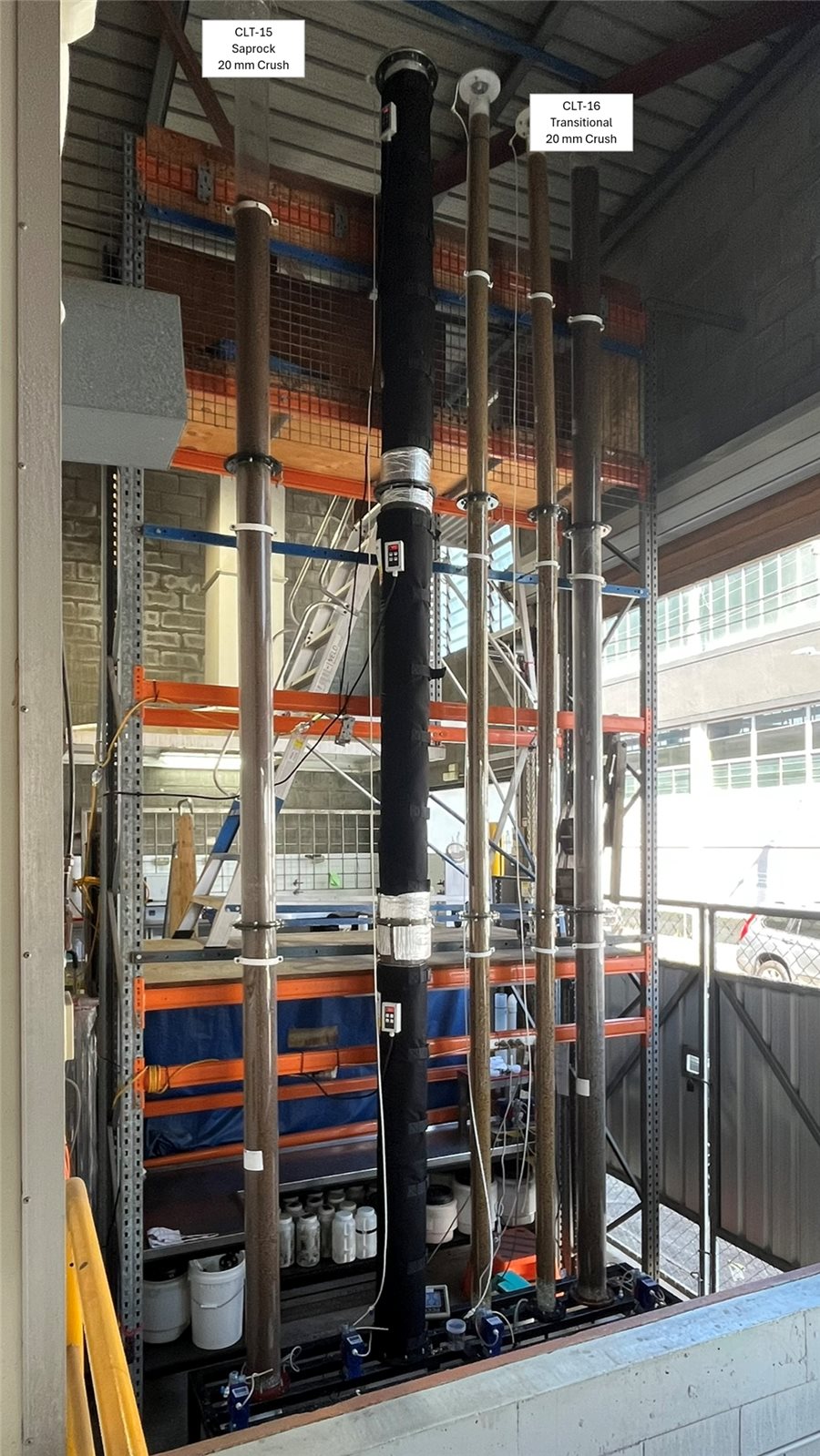
6m column leach testing in progress.
Advancing to Development
In July 2026, Red Metal commissioned DRA Global, AMDAD Mining and Core Group to design, optimise and cost a mining and processing flowsheet for Sybella, including supporting infrastructure. This is expected to deliver the project’s first robust economic assessment by late 2026 or early 2027, informing a Definitive Feasibility Study scheduled to begin in 2027 — a clear, near-term path from resource to a fundable development decision.
Positioned for Structural Demand
Global demand for magnet rare earths, used in electric vehicles, wind turbines and defence technologies, continues to grow, while supply remains geopolitically concentrated and constrained outside China. A technically simpler, 100%-owned project positions Red Metal to bring new supply to market as that demand builds.